The Basic Tools Every Scooter Owner Should Own
Hook the reader by addressing the common frustration of small scooter issues and the high cost of mechanic visits. Emphasize that with the right basic tools, many maintenance tasks can be done at home, even without prior experience. Mention the convenience for Malaysian commuters who rely on their scooters daily.
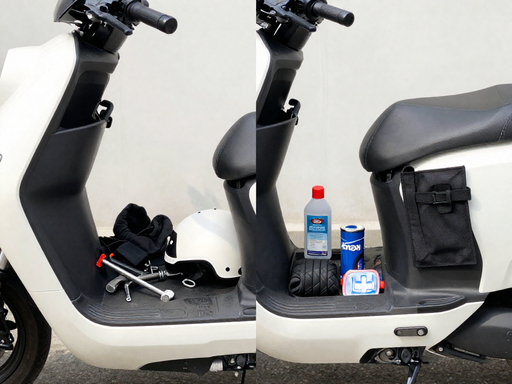
Why You Need Your Own Scooter Toolkit
Owning a scooter in Malaysia often means relying on workshops for every little hiccup, but investing in a basic toolkit can free you from that dependency. The cost savings over time are substantial—mechanic visits add up, especially for simple tasks like tightening a loose mirror or adjusting brake tension. With your own set of tools, you can handle these minor fixes at home, saving both money and time that would otherwise be spent waiting in a queue at the shop.
Beyond the financial side, having a toolkit on hand offers unmatched convenience. Imagine a side mirror vibrating loose during your morning commute from Subang Jaya to KL; with a wrench in your underseat storage, you can pull over and secure it in minutes, instead of riding with reduced visibility or detouring to a mechanic. The same goes for sudden cable slack or a chain that needs a quick tension tweak after a rainy ride through Penang—small adjustments that can keep you safe and your ride smooth.
Finally, building your own toolkit naturally grows your mechanical confidence. As you learn to diagnose squeaks, snug up bolts, and perform routine checks, you'll develop a deeper understanding of your scooter. This not only fosters a sense of self-reliance but also helps you catch potential issues before they become costly repairs, making you a more confident, long-term owner.
Must-Have Hand Tools for Every Scooter Owner
A well-chosen set of hand tools makes routine maintenance and small repairs on your scooter quick and frustration-free. Start with a combination wrench set in metric sizes from 8 mm to 19 mm. These cover the majority of bolts and nuts on Malaysian-market scooters, from axle nuts to engine mounts.
Pair the wrenches with a socket set and ratchet. Metric sockets in the same range, along with a short extension bar, help you reach fasteners tucked behind body panels or inside the engine bay. A 1/4-inch or 3/8-inch drive set is light enough for home use yet sturdy for occasional heavier work.
No toolkit is complete without screwdrivers. Keep both flathead and Phillips drivers in at least two sizes—small for carburettor and electrical adjustments, and larger for body screws. A set of precision screwdrivers can also come in handy for tight spots.
Most scooter body panels, brake covers, and many handlebar controls use hex-head bolts, so an Allen or hex key set is indispensable. Look for a folding set or individual L-keys with ball ends to work at slight angles in cramped spaces.
For gripping and bending, include a pair of needle-nose pliers for reaching into tight areas and standard slip-joint pliers for larger items. They help with stubborn cotter pins, hose clips, and holding small parts.
An adjustable wrench acts as a backup when you encounter an odd-sized fastener that doesn’t match your spanners. Choose a model with a smooth jaw adjustment and a comfortable grip.
Finally, a reliable tire pressure gauge is a safety essential. An accurate dial-type gauge lets you check pressure weekly, helping to extend tire life, improve fuel economy, and maintain stable handling on wet Malaysian roads. Keep these tools in a small pouch or box under your seat, and you’ll be ready for most basic scooter jobs.
Specialized Scooter-Specific Tools
While a basic toolkit covers many jobs, some scooter maintenance tasks call for dedicated tools that make the work safer and simpler. Investing in a few specialized items can save time and prevent damage to delicate components.
A thin-walled spark plug socket is a must for reaching deeply recessed plugs. Pair it with a spark plug gap tool so you can check and adjust the electrode gap precisely—an often-overlooked step that keeps your engine starting easily and running smoothly, especially in Malaysia’s humid climate.
If your scooter uses a replaceable oil filter, a proper oil filter wrench is invaluable. It grips the canister firmly without crushing it, letting you spin off the old filter cleanly during oil changes. Even the strap-type wrenches found at local spare-part shops work well.
For chain-driven scooters—common among kapcai-style bikes—a chain breaker and rivet tool allows you to shorten a new chain to the correct length and securely rivet the master link. Using the right tool prevents weak links that could snap on the road.
Most modern scooters rely on an automatic CVT transmission. When it’s time to replace the drive belt, a CVT belt removal tool holds the variator in place while you loosen the nut. Without it, you risk rounding off bolts or damaging the variator fins. These tools are inexpensive and easily found online or at motorcycle accessory shops across Malaysia.
Finally, a valve core remover—often just a small forked cap—lets you deflate tyres, install new valve cores, or replace leaky ones. It’s a tiny tool that costs almost nothing but makes roadside tyre fixes far less frustrating.
These niche tools don’t take up much space but will quickly prove their worth once you start doing your own scooter servicing.
Essential Consumables and Safety Gear
Even the best toolkit is incomplete without the right consumables and safety gear. These items help you finish repairs on the spot or protect you while you work.
A reliable tire repair kit with rubber plugs and a reamer lets you patch a puncture without removing the wheel. Pair it with a CO2 inflator or a compact bicycle pump to reinflate the tire—essential for our unpredictable Malaysian roads where a nail can find you anywhere.
For quick fixes, keep a handful of zip ties and a roll of quality electrical tape. They can secure a loose cable, hold a broken fairing, or temporarily patch a cracked hose. Add some shop rags, hand cleaner, and a box of disposable gloves to keep your hands clean during roadside repairs.
Your safety matters too. Safety glasses guard your eyes from debris, and cut-resistant gloves protect your hands when working with sharp parts. Finally, a basic multimeter is a lifesaver for diagnosing electrical gremlins. You don’t need a pro model—a simple digital meter helps test fuses, battery voltage, and switch connections.
With these consumables and safety items in your scooter’s storage, you’ll be prepared for most common mishaps and repairable break-downs.
Building a Portable Emergency Kit for Your Scooter
When you're out on the road, a few basic tools can make the difference between a quick fix and a long wait for help. A compact emergency kit stashed under your seat gives you peace of mind for everyday commutes or weekend rides.
- Mini tool roll: Include a few essential wrenches (8 mm, 10 mm, 12 mm) and a multi-bit screwdriver. These handle most minor adjustments on a scooter.
- Tyre plug kit and CO₂ cartridges: A puncture is the most common roadside headache. A plug kit lets you temporarily seal a tubeless tyre, and CO₂ cartridges provide quick inflation to get you to a tyre shop.
- Portable jump starter: Instead of bulky jumper cables, a compact lithium-ion jump starter can revive your scooter's battery without needing another vehicle—ideal when you're parked in a quiet area.
- Duct tape and heavy-duty zip ties: These temporary heroes can secure loose panels, hold a broken mirror, or reattach a dangling licence plate until you reach home.
- Small first-aid kit: A pouch with antiseptic wipes, plasters, and a triangular bandage covers minor scrapes. It’s especially useful if you ride to more rural spots where clinics are far.
Keep the kit in a waterproof pouch and check it every few months to replace anything used or expired.
How to Organize and Store Your Scooter Tools
Keeping your tools well-organized means less time searching and more time riding. Whether at home or on the go, these practical storage ideas will help you maintain a tidy toolkit.
At Home: Toolboxes, Carts, and Wall Solutions
A good toolbox is the simplest starting point. Choose one with removable trays or compartments for small items like Allen keys and sockets. If you often move around the garage or car porch, a rolling tool cart with drawers keeps everything mobile and within arm’s reach. For wall storage, magnetic strips are excellent for holding spanners, pliers, and screwdrivers in plain view. Pair them with a pegboard and hooks to hang larger or oddly shaped tools such as a tyre pressure gauge or cable ties.
Group and Label for Quick Access
Sort your tools by task rather than by type. Create dedicated sections for tyre repairs, basic engine checks, and electrical work. For instance, keep your spark plug socket, gap tool, and spare plug together in one drawer. Label each drawer or bin clearly — this saves time and helps a riding buddy or family member lend a hand without confusion.
On‑Bike Storage: Under‑Seat Toolkit
The under‑seat compartment on most scooters is prime storage for your emergency kit. Use small pouches or zippered bags to prevent tools from rattling and to protect them from moisture. Always include a laminated checklist inside the compartment. List every tool, spare part, and consumable you carry — such as a multi‑tool, tyre repair kit, spare fuses, and a small first‑aid pack. After any roadside fix, check the list before you ride off, so you never leave a tool behind or run out of essentials.
FAQ
What are the absolute must-have tools for a new scooter owner?
For a new scooter owner in Malaysia, essential tools include a multi-bit screwdriver set, a set of combination wrenches (usually 8mm–17mm), a pair of pliers, a tire pressure gauge, and a spark plug socket. These basics allow you to perform routine checks, tighten fasteners, and handle minor repairs at home or roadside. Keep everything organized in a sturdy pouch or box under your seat.
Can I perform basic scooter maintenance if I have no mechanical experience?
Absolutely, many basic maintenance tasks like checking fluid levels, adjusting tire pressure, and replacing spark plugs are straightforward and well-documented in your scooter’s manual or online tutorials. Start with simple jobs and gradually build confidence, but always know your limits and consult a mechanic if unsure. Safety gear and a clean workspace are essential.
Do I need a torque wrench for scooter repairs?
While not strictly essential for every beginner, a torque wrench is highly recommended for critical fasteners like wheel nuts and brake components to prevent over-tightening or under-tightening. In Malaysia, a basic click-type torque wrench can be a worthwhile investment once you start doing more involved maintenance. Always refer to your scooter’s service manual for specified torque values.
How much should I expect to spend on a basic scooter toolkit?
A decent starter toolkit for scooter maintenance in Malaysia can be assembled for around RM100 to RM250, depending on quality and brand. Individual tools from local hardware stores or online marketplaces can be cost-effective. Focus on durability and essential pieces rather than large sets with tools you may never use.
Are there tools specific to automatic scooters?
Yes, automatic scooters have unique requirements: a strap wrench or specialized tool for the oil filter and variator removal, and a clutch holding tool for belt changes. Many also need a large socket or special adapter for the variator and clutch nuts. Standard metric tools cover most other fasteners, but these specific items are crucial for transmission work.